On average, retailers expect about 18% or $158 billion, of merchandise sold during the holiday shopping season to be returned, according to the National Retail Federation’s most recent data.
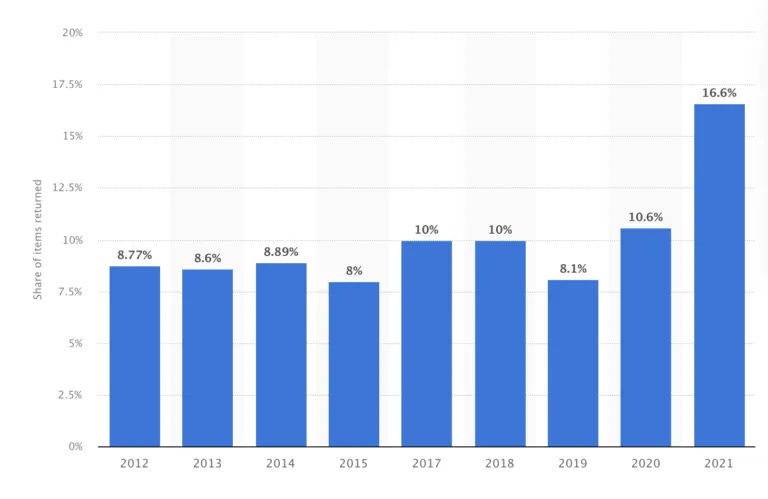
While it’s not breaking news that e-commerce sales have increased in recent years, a less obvious side effect has been the increase in returns, especially in apparel. The inability to verify specific attributes of a product, coupled with potential shipping complications has spurred this trend. In fact, around 20% to 30% of products ordered online are returned, as compared to only 9% in brick-and-mortar stores. For the full year of 2021, the return rate was 16.6% of U.S. retail purchases – totaling $761 billion with an increasing trend across the last few years.
Source: Statista
In light of these expectations around holiday returns, retailers and supply chain partners are taking action to reduce the impact on their bottom lines.
In a creative approach, UPS is launching a logistics-as-a-service offering, encompassing optimized deliveries, visibility, financial solutions, supply chain enhancements, and for returns : reverse logistics. The delivery company has extended its partnership with Amazon, allowing for more convenient returns through UPS drop-off locations. The retail giant is hoping that this will encourage more consumer purchases. Similarly, in their Q4 earnings call, Overstock announced that consumers will have the ability for returns to be picked up from their home with UPS.
Since at least 10% of returns cannot be resold, many retailers are making policy changes, such as charging a fee or shortening the return window. Retailers like JCrew, H&M, and JCPenny have begun charging return fees to disincentivize consumers from overbuying or excessively returning. As retailers shift their policies around online returns, this encourages consumers to return online orders in stores to avoid these e-commerce return fees.
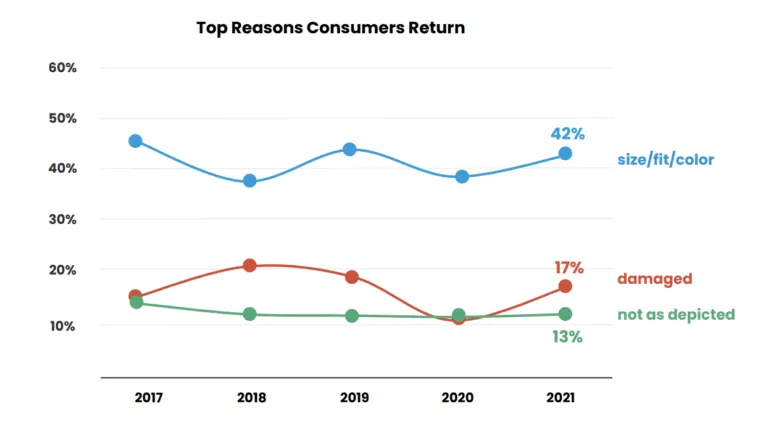
Consumers return purchases for a number of reasons, but the three most common are for size/color/fit, damaged goods, and misleading product descriptions. In an effort to prevent the 42% of returns caused by size/color/fit, Google recently showcased new virtual tools and augmented reality features to allow consumers to better match products to their unique needs. Many retailers are also investing in analytics to understand reasons for returns or monitor reviews to quickly identify and resolve key reasons for returns.
Whether it is simplified return shipping, encouraging returns to physical locations or understanding why customers are returning products, retailers will need to adjust to the shifts in consumer behavior.