AI & Retail Science

Smarter Retail Starts with Better Science.

Retailers, wholesalers, and manufacturers are sitting on more data than ever and getting less from it than they should.
RetSci applies advanced AI, machine learning, and retail science to turn that data into decisions: better forecasts, leaner inventory, smarter replenishment, and measurable bottom-line impact.

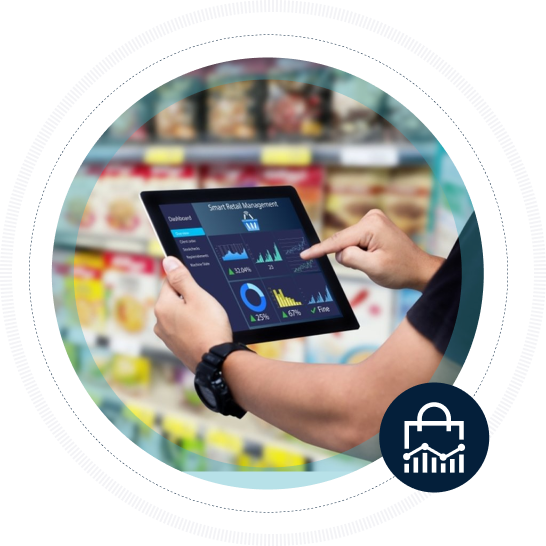
From forecast to shelf, AI across your entire operation

Demand forecasting & predictive analytics

Accurate forecasting is the foundation of every retail, wholesale, and manufacturing operation — and where most businesses leave the most value unrealized. RetSci builds and refines demand models that capture what standard platform algorithms miss: promotional lift, cannibalization, seasonal shape, weather, local events, and new item ramp.

AI-powered replenishment & inventory optimization

Replenishment is where forecast accuracy pays off — or falls apart. We pinpoint where your rules tie up cash in excess stock and where they expose you to out-of-stocks, then apply optimization models that adapt to demand variability, lead times, and supplier behavior. Your inventory works harder, without added risk.

Custom machine learning models

We build ML models trained on your data and tuned to your business dynamics — markdown optimization, promotional response, lead time variability, shrink and waste forecasting, demand sensing. Not proof-of-concept demos: production models embedded in your planning workflows and measured against real outcomes.

Opportunity assessment

Before any AI project begins, know where the value is. Our structured assessments quantify the financial impact of AI across your operations — forecast accuracy gaps, inventory inefficiency, lost sales, markdown leakage. You walk away with a prioritized roadmap: the two or three initiatives with the highest ROI, with realistic timelines and expected outcomes.

Optimization

Models degrade as assortments, suppliers, and demand patterns shift. We monitor performance against KPIs, catch degradation early, and continuously recalibrate — so you get compounding value, not a one-time lift.

Advanced AI systems

For businesses ready to move beyond individual models, we design integrated AI systems connecting the full planning stack — demand sensing, forecasting, replenishment, allocation, markdown. Step-change results come not from one better model, but from a system of models that share signals and eliminate manual hand-offs.

The RetSci difference

Our team combines hands-on retail, wholesale, and distribution experience with deep scientific rigor. The models we build reflect how your business actually works — not how a textbook assumes it does.

  • What’s the right product mix?
  • Which products will appeal to my customers?
  • What attributes are essential?
  • How much should I buy?
  • How can I optimize my size profiles and pack configurations?
  • How much floor space do I need for a category? A department?
  • How much shelf space does this product need?
  • Where on the shelf should it go?
  • How does product placement impact sales?
  • Does my customer shop online or in-store?
  • How does the price of an item impact sales?
  • How does an item’s price affect other items?
  • When should I start markdowns?
  • How much should I reduce the price of an item?
  • How much safety stock should I have on hand?
  • How often should I replenish?
  • What’s the optimal size mix for each store?
  • How should I stock for upcoming promotions?
  • What’s the best omnichannel fulfillment strategy?
  • Are my fulfillment algorithms and replenishment practices aligned?
  • Am I efficiently fulfilling customer orders?
  • How should I anticipate e-commerce demand during the holidays?
  • Should I route demand to satellite stores?
  • Should I anticipate demand as close as possible to the customer?

Resources

A supply chain manager inspecting inventory on tall warehouse shelving while holding a digital tablet.

Demand Forecasting and Demand Planning – What is the difference?

When quantifying and allocating products, retailers frequently reference “demand forecasting” and “demand planning” synonymously; while they share many similarities, they are essentially two distinct concepts that play different roles in...

A retail store promotional sign displaying a "2 FOR $30" deal with shoppers browsing clothing in the blurred background.

Top retail trends 2022: Here is what we have learned

In the midst of a pandemic, national lockdowns, shortage of workers, supply issues, and sweeping uncertainty, retailers had to become more creative and flexible than ever before. Across the last...

A stylish clothing boutique interior featuring racks of organized apparel and a pair of platform sneakers on a white display shelf.

Q2 2022 Retail earnings call themes

Three themes we have seen in this retail earnings season: Inventory Excess, Continued Supply Chain Delays, and Inflation. Inventory Excess Inventory excess is currently a widespread challenge across retail. Everyone...

Not sure where to start?
Start with an opportunity assessment.

The fastest way to understand the value AI could unlock in your business is to look at your data with experienced eyes. Our opportunity assessment is a structured, low-commitment engagement that gives you a clear picture of where AI would move the needle — and what it would take to get there.